
Flanges Manufacturer in Patna
Flanges Manufacturer
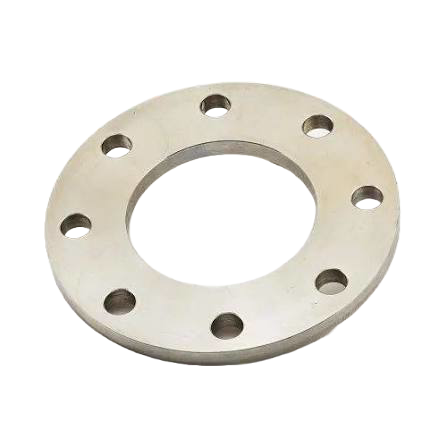
In modern industrial facilities, reliable piping connections are essential for preventing leaks and maintaining operational safety. Flanges act as critical mechanical connectors, joining pipes, valves, pumps, and pressure vessels into a cohesive fluid handling network. For engineers and procurement teams looking for a dependable Flanges Manufacturer in Patna, S. Nomi & Co. delivers engineered piping components designed to withstand severe mechanical stresses, pressure fluctuations, and corrosive environments across various industrial applications.
Key Features of Industrial Flanges
Selecting the right flange involves assessing specific mechanical and physical properties to ensure long-term integrity:
- Material Suitability: Flanges are manufactured using carbon steel, stainless steel, and alloy steel to suit different media types and environmental conditions.
- Pressure & Temperature Handling: Precision forging allows flanges to hold pressure ratings from Class 150 to Class 2500 without compromising structural integrity under thermal cycles.
- Dimensional Accuracy: Adherence to standards like ASME B16.5 and B16.47 ensures seamless alignment with existing piping setups.
- Connection Types: Available in Slip-On, Weld Neck, Blind, Socket Weld, and Threaded configurations to accommodate varied assembly demands.
- Corrosion Resistance: Specially treated surfaces and high-grade alloys protect against chemical attack and atmospheric degradation.
Primary Industrial Applications
Industrial flanges provide secure, dismountable joints across critical sectors:
- Process & Chemical Plants: Safe containment of volatile, hazardous, or high-purity liquids and gases.
- Water & Wastewater Infrastructure: Reliable jointing for municipal water distribution and treatment facilities.
- Power Generation: High-temperature steam and feedwater lines require robust, pressure-rated flanged connections.
- Manufacturing & Industrial Utilities: Heavy-duty utility piping for compressed air, cooling water, and fuel supply lines.
How to Select the Right Industrial Flanges
Industrial buyers should evaluate the following parameters before procurement:
- Nominal Pipe Size (NPS): Matches the matching pipe dimension to ensure smooth flow.
- Pressure Class Rating: Determined by operating system pressure and working temperature.
- Material Grade: Must be chemically compatible with the medium passing through the pipe.
- Flange Facing: Choice of Flat Face (FF), Raised Face (RF), or Ring Type Joint (RTJ) based on sealing requirements.
- Applicable Standards: Verification against ASME, DIN, or BS specifications to guarantee compliance.
Why Choose S. Nomi & Co.
As an experienced Flanges Manufacturer in Patna, S. Nomi & Co. combines deep product knowledge with strong supply chain capabilities. Industrial buyers choose us for:
- Extensive Inventory: A broad range of sizes, pressure classes, and material grades available for prompt dispatch.
- Technical Assistance: Guidance on choosing appropriate flange specifications for customized project demands.
- Consistent Quality Control: Rigorous visual and dimensional inspection protocols on all outgoing materials.
- Regional Supply Expertise: A strong understanding of the industrial supply needs throughout Bihar.
Conclusion & CTA
Securing reliable flange connections is critical to avoiding costly downtime and safety hazards in industrial piping systems. Whether outfitting a new processing plant or replacing legacy components, working with a knowledgeable Flanges Manufacturer in Patna ensures long-term operational success.
Contact S. Nomi & Co. today to discuss your project requirements, request technical documentation, or receive a competitive quote for your industrial flange needs in Patna and across Bihar.
Frequently Asked Questions (FAQs)
Q1: What are the main types of industrial flanges?
The most common types include Weld Neck (for high pressure), Slip-On (for ease of alignment), Blind (to seal pipe ends), Socket Weld (for small-bore high pressure), and Threaded flanges (for non-welded applications).
Q2: How do I determine the correct pressure class for a flange?
Pressure class (e.g., Class 150, 300, 600) is determined by evaluating the maximum operating pressure and temperature of the system in accordance with ASME B16.5 standards.
Q3: Why are flanges facing important?
Flange facing dictates the type of gasket used and affects sealing performance. Raised Face (RF) is standard for general applications, while Ring Type Joint (RTJ) is preferred for extreme pressure and temperature environments.