
Forged Fittings Manufacturer in Chhattisgarh
Forged Fittings Manufacturer
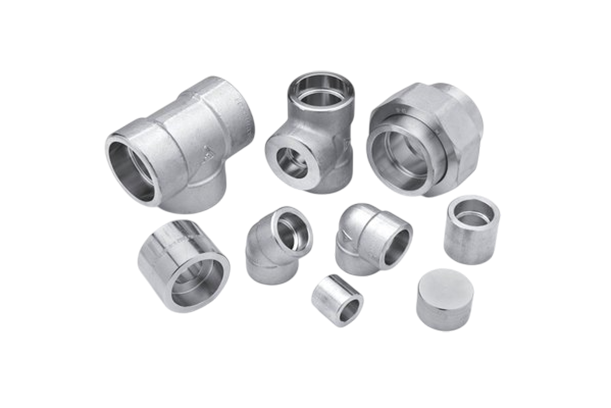
Forged fittings are precision-engineered piping components used to connect, branch, redirect, or terminate pipework in applications where dependable mechanical performance and dimensional compatibility are important. Unlike fabricated connections, forged fittings are produced from metal that is shaped under controlled forging conditions, making material selection, manufacturing quality, connection type, and dimensional accuracy important considerations for industrial procurement.
For buyers searching for a Forged Fittings Manufacturer in Chhattisgarh, the right product should be selected according to pipe size, pressure class, temperature, service medium, material requirements, and connection configuration. S. Nomi & Co., established in 1968, manufactures, exports, and stocks industrial pipe fittings, flanges, valves, and related products. Its documented forged fitting range includes carbon steel, stainless steel, alloy steel, duplex steel, copper alloys, and nickel alloys, subject to the applicable product specification.
Forged fittings can be relevant to piping systems associated with steel, power, cement, mining, engineering, chemical processing, and other process-oriented industries. For industrial projects in Chhattisgarh, correct specification is particularly important where piping components must integrate with existing equipment, valves, flanges, and process lines.
Why Choose a Forged Fittings Manufacturer in Chhattisgarh?
Selecting a Forged Fittings Manufacturer in Chhattisgarh should involve more than comparing product prices. Industrial procurement teams generally need to evaluate whether the supplier can understand the required specification, coordinate the order accurately, and provide the appropriate product configuration.
Accessibility to industrial products is one consideration, particularly when procurement involves multiple piping components. Reliable sourcing also matters because the required fitting may need a particular material grade, connection type, pressure class, or dimensional standard.
For larger projects, buyers should discuss quantity, packaging, dispatch coordination, documentation, and project schedules before placing an order. Technical product guidance can also help procurement teams avoid mismatches between the fitting and the piping system.
The objective should be consistent product quality and application suitability rather than simply selecting a component based on appearance or nominal size. This approach is especially useful when purchasing forged fittings for maintenance, replacement, expansion, or new industrial installations.
Types of Forged Fittings Available
The documented forged fitting range of S. Nomi & Co. includes several connection and configuration options. The company’s forged fittings page specifies sizes from 1/4″ NB to 4″ NB and pressure classes of 2000, 3000, 6000, and 9000 lbs. Product selection remains dependent on the particular fitting, material, size, and applicable specification.
Forged Elbows
Forged elbows are used where a piping route needs to change direction. The required angle and connection arrangement should be checked against the piping design and installation requirements.
Forged Tees and Crosses
Tees provide branch connections from a main run, while cross-type fittings provide multiple branch connections. These configurations are useful when piping needs to divide flow into different directions. The company’s product information specifically lists tees and its site also documents forged cross tee products.
Forged Couplings
Forged couplings are used to connect compatible pipe or fitting sections. They are available in different configurations and should be selected according to the required connection, material, dimensions, and pressure class.
Forged Unions
Forged unions provide a detachable connection arrangement that can be useful where sections of piping may need to be disconnected for maintenance or replacement.
Forged Bushings
Bushings are used where a connection needs to accommodate different nominal sizes or connection arrangements. Correct thread and dimensional compatibility should be confirmed before ordering.
Forged Plugs and Sockets
Forged plugs can be used for terminating or closing compatible threaded connections, while socket-type fittings provide a specific connection configuration for piping assemblies.
Threaded and Socket-Weld Forged Fittings
The documented range includes threaded and socket-weld configurations, including threading outlets, welding outlets, and socket-weld outlets. The company’s website also identifies ASME B16.11 in connection with forged, socket-welding, and threaded fittings.
Applications of Forged Fittings in Chhattisgarh Industries
For industrial buyers, forged fittings are generally selected as part of a larger piping system rather than as standalone components. In steel and metal plants, they can be incorporated into utility, process, and equipment-connected piping where appropriate pressure-rated connections are required.
Power-generation facilities may use forged fittings in auxiliary and process piping systems, subject to the applicable service conditions and engineering specification. Cement and engineering plants can similarly require fittings for compressed air, water, utility, process, and equipment-related piping.
Mining operations may require robust piping connections for water, slurry-related services, compressed air, or other plant utilities, although the exact fitting material and configuration must be determined from the service conditions.
Chemical processing and oil-and-gas-related applications can involve demanding temperature, pressure, and corrosion conditions. In such cases, the fitting material and applicable standard need to be matched carefully with the fluid and operating environment.
For procurement teams across Chhattisgarh, including industrial centres such as Raipur, Bhilai, Durg, Korba, Bilaspur, and Raigarh, the engineering specification should remain the primary basis for selecting a forged fitting rather than location alone.
Materials Used for Forged Fittings
Material selection directly affects how a fitting performs under pressure, temperature, corrosion exposure, and mechanical loading. The documented product range includes several material families.
- Carbon Steel: The company lists ASTM/ASME A105 and ASTM/ASME A350 LF2 among its carbon-steel forged fitting specifications.
- Stainless Steel: The listed stainless-steel range includes ASTM A182 grades such as F304, F304H, F316, F316L, F317L, F321, F347, and F904L, among others.
- Alloy Steel: The documented alloy-steel range includes ASTM/ASME A182 grades F5, F9, F11, F12, F22, and F91.
The product information also identifies duplex steel, copper alloys, and nickel alloys, including specified ASTM/ASME material references.
For buyers, the correct material should be selected according to operating pressure, temperature, corrosion conditions, process fluid, mechanical requirements, and applicable project standards. Material should never be selected solely because a fitting has a higher nominal grade or price.
Standards, Pressure Classes and Specifications
Specification control is essential when purchasing forged fittings. The company’s documented forged fitting range references ANSI B16.11 dimensions and lists 2000, 3000, 6000, and 9000 lb classes. The website also identifies ASME B16.11 for forged socket-welding and threaded fittings.
Material specifications should also be checked. Examples documented by the company include ASTM/ASME A105, A350 LF2, A182, and other material standards corresponding to particular alloy families.
Before ordering, buyers should confirm:
- Nominal pipe size
- Pressure class
- Material grade
- Socket-weld or threaded connection
- Applicable dimensional standard
- Required end configuration
- Quantity
- Project-specific documentation requirements
The pressure class should not be interpreted independently of material, temperature, design code, and service conditions. The final selection should follow the relevant engineering specification.
How to Select the Right Forged Fittings for an Industrial Application
Choosing a fitting systematically can reduce procurement errors and installation problems.
- Identify the required pipe size: Confirm the nominal bore and connection dimensions from the piping drawing, bill of materials, or equipment specification.
- Determine operating pressure: The fitting’s pressure class must be appropriate for the design pressure and service conditions.
- Consider operating temperature: Temperature can affect material performance and pressure ratings, so it should be considered alongside the selected grade.
- Select the appropriate material: Match the material with the process fluid, corrosion exposure, temperature, pressure, and mechanical requirements.
- Choose the connection type: Determine whether the application requires threaded, socket-weld, or another specified configuration.
- Verify applicable standards: Check the required dimensional, material, and project standards before confirming the purchase.
- Check dimensional compatibility: Fitting dimensions, pipe dimensions, threads, and connection details must correspond correctly to the piping arrangement.
- Confirm quantity and project requirements: For bulk procurement, provide the complete material schedule, required quantities, specifications, documentation needs, and delivery coordination requirements.
Serving Industrial Requirements Across Chhattisgarh
Industrial procurement in Chhattisgarh can involve requirements ranging from individual maintenance components to larger project quantities. The company’s website specifically lists Raipur, Bhilai, Korba, Raigarh, Durg, and Bilaspur among its service locations, along with other industrial areas including Urla, Siltara, Borai, Bahesar, Tifra, and Bhanpuri.
For buyers in these areas, procurement discussions should include the complete technical specification rather than only the product name. Sharing size, material, pressure class, connection type, quantity, and required documentation allows the supplier to assess the requirement more accurately.
Why Choose S. Nomi & Co. for Forged Fittings?
Nomi & Co. has been established since 1968 as a manufacturer, exporter, and stockist of industrial pipe fittings, valves, boiler mountings, and flanges. As a leading Forged Fittings Manufacturer in Chhattisgarh, the company offers a comprehensive range of forged fittings across multiple configurations and material families to suit specific application needs. Its broader inventory also features flanges, butt-weld fittings, branch outlets, and valves. For bulk procurement, contractors and engineering teams can submit material schedules, drawings, and specifications for tailored evaluation and order coordination.
Quality Considerations for Forged Fittings
Quality evaluation should consider both the physical product and the supporting documentation. General industrial checks may include material verification, dimensional inspection, thread inspection, visual or surface examination, and verification against the applicable product standard.
Where applicable, buyers may also request Material Test Certificates or other documentation required by their project specification. The company’s forged cross tee page states that Material Test Certificates can be provided upon demand, while its website describes inspection and quality-control practices for its fitting products.
However, buyers should distinguish between general industry quality practices and tests specifically required for their purchase order. Any pressure testing, third-party inspection, traceability, certification, or special documentation should be confirmed for the particular product and order before procurement.
Frequently Asked Questions About Forged Fittings
Q1. What are forged fittings used for?
Forged fittings are used to connect, branch, redirect, or terminate sections of piping. They are commonly selected for applications where the required material, pressure class, connection type, and dimensional standard are suitable for the service.
Q2. Which materials are used to manufacture forged fittings?
Depending on the product, documented materials include carbon steel, stainless steel, alloy steel, duplex steel, copper alloys, and nickel alloys. The appropriate grade should be selected according to the operating environment and applicable specification.
Q3. Can I order forged fittings in bulk for industrial projects in Chhattisgarh?
Yes, industrial buyers can discuss bulk requirements by providing the required sizes, materials, pressure classes, connection types, quantities, and documentation requirements. Project-specific availability and order terms should be confirmed before purchase.
Discuss Your Forged Fitting Requirement
If you are sourcing a Forged Fittings Manufacturer in Chhattisgarh for a maintenance requirement, industrial project, replacement order, or bulk procurement, share the required size, material grade, pressure class, connection type, quantity, and applicable specification with S. Nomi & Co. The team can help discuss suitable forged fitting configurations, product details, documentation requirements, availability, and bulk-order requirements based on your application.
Contact S. Nomi & Co. for forged fitting specifications and procurement discussions tailored to your industrial piping requirement.